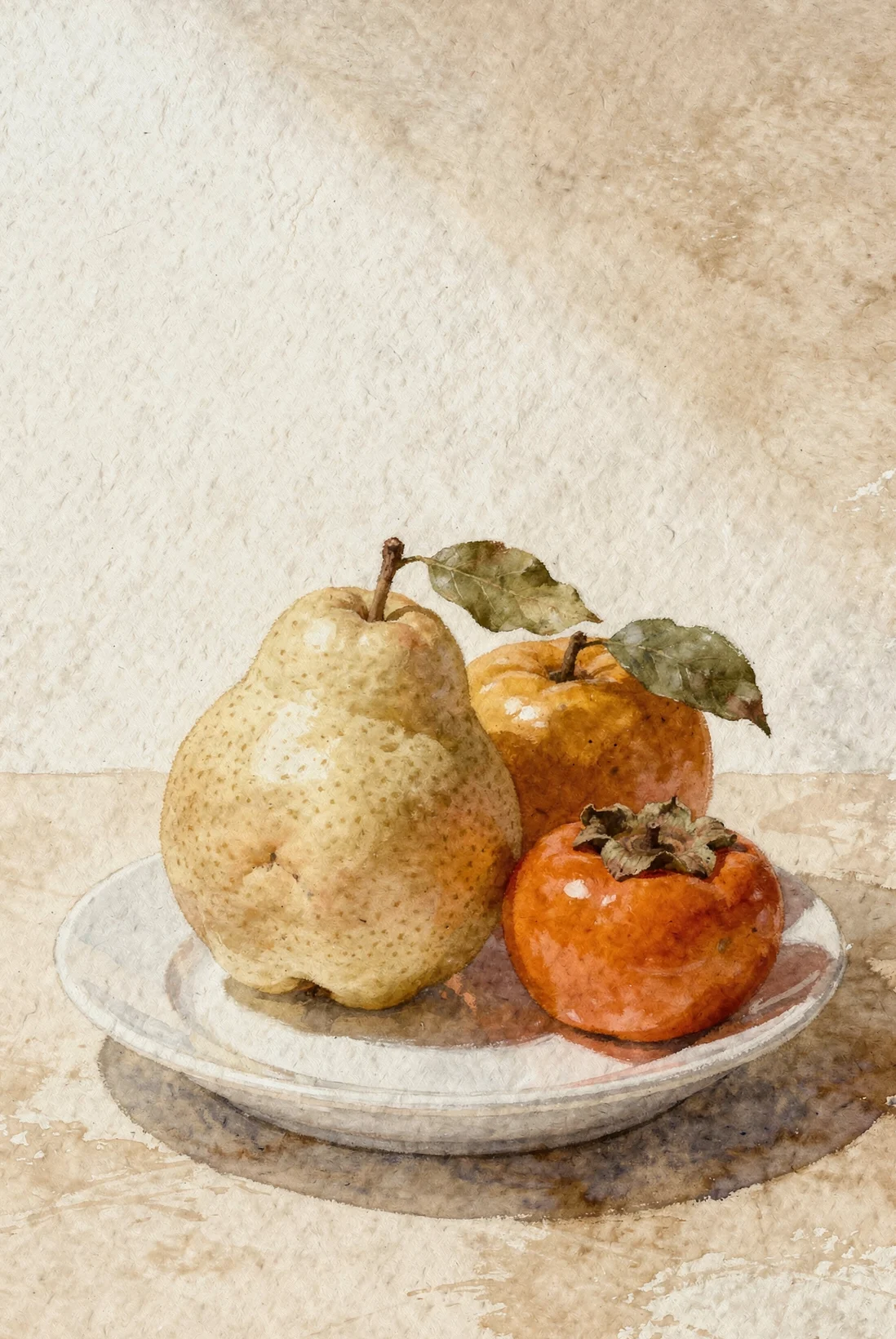
Pears and Persimmons, Late Autumn
백자 접시의 가을
The Korean pear, or bae, is round and russet-gold rather than green and tapered, its skin freckled with pale specks; beside it the persimmon ripens deep orange, its dried calyx still attached. Both fruits arrive in late autumn and both are stacked on the ancestral rites table at Chuseok, though most of them are simply peeled and eaten at home. The white porcelain plate beneath them is baekja, the unadorned glazed ware Joseon potters made for centuries. Nothing else occupies the frame — only soft light, a faint shadow, and fruit at its best moment.
흰 백자 접시 위에 배와 감이 함께 놓였다. 배는 껍질에 점점이 박힌 과점(果點)까지 보이는 누런 황갈색이고, 감은 꼭지 자리에 마른 꽃받침을 그대로 단 채 붉게 익었다. 추석 차례상에 오르는 과일이자, 서리 내리기 전 마지막으로 거두는 열매다. 창으로 든 빛이 접시 굽 아래에 옅은 그림자를 남기고 그대로 멎어 있다.
Why this subject
한국의 가을을 가장 정직하게 보여주는 것은 풍경보다 과일 쪽이라고 생각했다. 배와 감은 제수(祭需)로 쓰이면서 동시에 가장 흔한 계절 간식이라, 의례와 일상이 한 접시에 같이 놓이는 드문 소재다. 백자의 흰 바탕은 그 두 성격을 굳이 나누지 않고 함께 받아준다.
On the style
수채 질감은 배 껍질의 거친 과점과 감 표면의 매끈한 윤기를 서로 다른 번짐으로 갈라놓는다. 낮은 채도의 따뜻한 색조에서 감의 주홍은 튀지 않고 가라앉아, 잘 익은 과육의 속색처럼 보인다. 확산된 빛은 백자 표면에서 반사점을 만들지 않고 유약의 미세한 푸른 기만 드러내며, 접시 가장자리와 상판이 만나는 자리에 경계가 흐린 그림자 한 겹을 남긴다.
Prompt
Korean pears and persimmons on a white porcelain plate, still life, painterly digital illustration with photographic composition, architecturally accurate forms rendered in soft watercolor texture, deserted tranquil scene, muted warm palette, soft diffused light, vertical 2:3 composition
25 September 2026Food still life